Digitization converts text, sound, and images (2D and 3D) into digital formats, allowing for easier storage, sharing, and editing. Each media type, however, presents unique challenges and tradeoffs.
Text
- Process: Scanning documents and using OCR (Optical Character Recognition) to convert characters into digital text.
- Tradeoffs: High OCR accuracy can be slow and may require manual checks. File sizes increase when adding formatting or images.
Sound
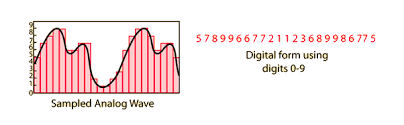
- Process: Sampling audio at set rates (e.g., 44.1 kHz for CDs) and encoding it in formats like MP3 (lossy) or WAV (lossless).
- Tradeoffs: Higher sample rates improve quality but enlarge files. Lossy formats save space but reduce fidelity.
2D Images
- Process: Scanning or photographing images into pixels, with resolution (DPI or PPI) dictating quality.
- Tradeoffs: Higher resolution means better detail but larger files; lossy formats (e.g., JPEG) save space at the expense of quality.
3D Objects
- Process: 3D scanners capture an object’s geometry, creating a point cloud processed into a 3D model.
- Tradeoffs: High-detail scans demand more storage and processing power, while compressed models save space but lose detail.