
This post relates to the first learning objective which is:
“Recall the creative process, social environment, and visionaries involved in the journey to the digital world we live in today.”
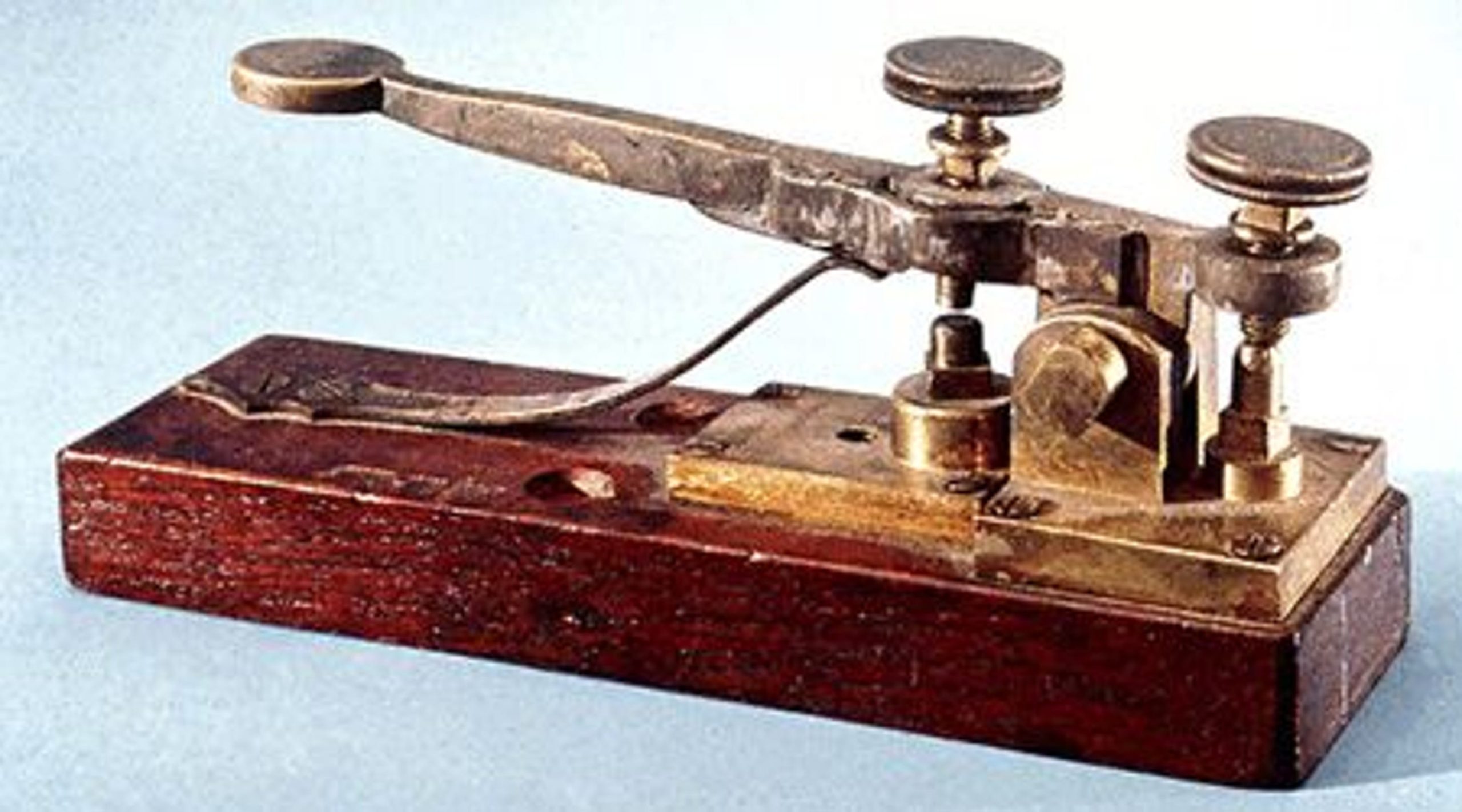
The Telegraph: The Digital Revolution Begins
Did you know that the invention of the telegraph started because of a personal tragedy? Samuel Morse, the guy who came up with Morse Code, actually made a career as a painter. But after his wife suddenly got sick and died while he was away working, he didn’t get the news until she was already buried—all because communication was so slow back then. That experience pushed him to come up with a faster way for people to stay connected, no matter the distance. And that’s how the telegraph was born.
Morse didn’t invent the telegraph completely from scratch. He was building upon ideas that already existed but were too complex to actually make work. For example, André-Marie Ampère discovered electromagnetism, and Alessandro Volta, the guy behind batteries, paved the way for Morse’s invention. Morse figured out how to make it simple by communicating through dots and dashes. These dots and dashes allowed people to send messages over a wire, using a series of signals to represent specific letters of the alphabet. Morse wasn’t just about making a cool gadget—he was about creating something practical, and that’s what made his version of the telegraph take off.
While inventing something that could change communication forever, you also need funding to put your ideas into practice. Morse had to convince the government to back his idea and fund the development of the telegraph. In the 1830s and 1840s, politicians were very skeptical and not eager to fund this “crazy” invention that might not even work. After years of pushing and pleading, Morse finally got federal funding to build the first telegraph line from Washington, D.C., to Baltimore in 1844. Once that was successful, the government saw the potential and fully supported Morse’s efforts.
Before the telegraph, business and communication were painfully slow—think snail mail. You couldn’t make business deals or share news on the fly. Everything took time. Morse’s telegraph not only sped up communication for news outlets but also made a major impact on the economy by speeding up transactions and making everything more efficient. Governments used it to send military orders, and everyday people used it to send messages to faraway friends and family. In a lot of ways, the telegraph was the first step toward the modern digital age. While we tend to think the digital revolution started with the internet, it actually began much earlier—with Samuel Morse and the telegraph. It wasn’t just about sending simple dots and dashes; it was about speeding up the world and connecting people like never before.
I asked ChatGPT to fix grammar, spelling, punctuation
here is my original prompt:
“This post relates to the first learning objective which is:
“Recall the creative process, social environment, and visionaries involved in the journey to the digital world we live in today.”
Did you know that the invention of the Telegraph started because of a personal tragedy? Samuel Morse, the guy who came up with Morse Code made a career as a painter. But after his wife suddenly got sick and died while he was away working, he didn’t get the news until she was already buried, all because communication was so slow back then. That experience pushed him to come up with a faster way for people to stay connected, no matter the distance. And that’s how the Telegraph was born.
More did not invent the telegraph completely from scratch. He was building upon ideas that people had but were far too complex to actually make. For example, Andre-Marie Ampere discovered electromagnetism, and Alessandro Volta, the guy behind batteries, paved the way for Morse’s invention. Morse figured out how to make it simple by communicating through Dots and Dashes. These Dots and Dashes allowed people to rely messages over the wire by using a series of Dots and Dashes to make up specific letters of the alphabet! Morse wasn’t just about making a cool gadget, he was about creating something that people could actually use in real life, and that’s what made his version of the telegraph take off.
While inventing something that could potentially change communication forever, you may need some outside funding in order to actually put your ideas to practice. Morse had to convince the government to back his idea and fund him inventing the telegraph. In the 1830’s and 1840’s politicians were very skeptical about the telegraph and they were not exactly eager to fund this “crazy” invention that may not even work. After years of pushing and pleading, Morse finally got federal funding to build the first telegraph line from Washington D.C to Baltimore in 1844. Quickly after Morse did this, the government saw its potential and were fully onboard and supported Morse entirely.
Before the telegraph was invented, business and communication were painfully slow (snail mail). You could not make business deals or share news on the fly. Everything took time. Morse’s telegraph not only sped up communication for news outlets, but also made a major impact on the economy by speeding up transactions and making everything more efficient. Governments used it to send military orders and everyday people used it to send messages to far away friends and families. In a lot of ways the telegraph was the first step toward the modern digital age. While we tend to think that the digital revolution started with the internet, it actually began way earlier with Samuel Morse and the telegraph. It wasn’t just about sending simple dots and dashes it was about speeding up the world and connecting people like never before.”
Here is what chatgpt outputted
“The Telegraph: The Digital Revolution Begins
Did you know that the invention of the telegraph started because of a personal tragedy? Samuel Morse, the guy who came up with Morse Code, actually made a career as a painter. But after his wife suddenly got sick and died while he was away working, he didn’t get the news until she was already buried—all because communication was so slow back then. That experience pushed him to come up with a faster way for people to stay connected, no matter the distance. And that’s how the telegraph was born.
Morse didn’t invent the telegraph completely from scratch. He was building upon ideas that already existed but were too complex to actually make work. For example, André-Marie Ampère discovered electromagnetism, and Alessandro Volta, the guy behind batteries, paved the way for Morse’s invention. Morse figured out how to make it simple by communicating through dots and dashes. These dots and dashes allowed people to send messages over a wire, using a series of signals to represent specific letters of the alphabet. Morse wasn’t just about making a cool gadget—he was about creating something practical, and that’s what made his version of the telegraph take off.
While inventing something that could change communication forever, you also need funding to put your ideas into practice. Morse had to convince the government to back his idea and fund the development of the telegraph. In the 1830s and 1840s, politicians were very skeptical and not eager to fund this “crazy” invention that might not even work. After years of pushing and pleading, Morse finally got federal funding to build the first telegraph line from Washington, D.C., to Baltimore in 1844. Once that was successful, the government saw the potential and fully supported Morse’s efforts.
Before the telegraph, business and communication were painfully slow—think snail mail. You couldn’t make business deals or share news on the fly. Everything took time. Morse’s telegraph not only sped up communication for news outlets but also made a major impact on the economy by speeding up transactions and making everything more efficient. Governments used it to send military orders, and everyday people used it to send messages to faraway friends and family. In a lot of ways, the telegraph was the first step toward the modern digital age. While we tend to think the digital revolution started with the internet, it actually began much earlier—with Samuel Morse and the telegraph. It wasn’t just about sending simple dots and dashes; it was about speeding up the world and connecting people like never before.”