
Digital technology has widely replaced analog due to its precision, efficiency, and reliability.
Here’s why digital excels!
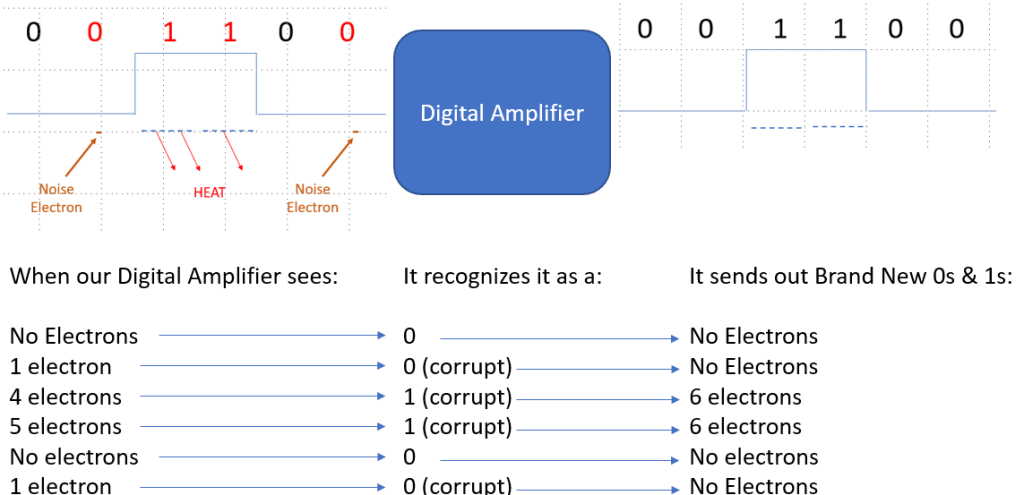
Noise Resistance: Digital systems can correct errors caused by noise or interference. Even if a signal becomes slightly corrupted, a digital amplifier can recognize the intended 0 or 1 and restore the correct signal. This ability to correct errors ensures consistent, high-quality transmission over long distances—something analog struggled with. Long-distance calls using analog were often muffled and scratchy because analog systems couldn’t effectively correct noise signals!
Efficient Storage: Digital data, represented by 0s and 1s, can be stored, processed, and retrieved much more efficiently than analog data. Digital files can be compressed, copied, and transmitted without any loss of quality, making them ideal for modern technology.
Flexibility: Digital systems allow seamless integration between devices like smartphones, computers, and cloud systems, making it easy to access information, communicate, and enjoy entertainment across multiple platforms. This flexibility makes digital technology usable in various contexts, such as education, business, and personal use.
Precision: Digital data, especially in formats like 24-bit color or high-definition audio, offers far more detail and clarity than analog formats.
Automation and Speed: Digital technology allows for faster processing and automation of complex tasks. It powers everything from internet searches to business operations, providing real-time results and enabling innovation in many fields.
Asked ChatGPT to fix grammar spelling and punctuation
Here is original post
“Digital technology has widely reaplaced analog due to its precision, efficiency, and reliability.
Here is why digital excels!
Noise Resistence: Digital systems can correct errors caused by noise or interference. Even if a signla becomes slightly corrupted a digital amplifier can recognize the intended 0 or 1 and restore the correct signal. This ability to correct errors ensrures consistent high quaility transmission over long distances, that is something that analog struggled doing. Long distance calls using analog was very muffled and scratchy becasue the ability to correct noise signlas was not there!
Efficient Storage: Digital data, represented by 0s and 1s, can be stored, processed, and retreived much more efficently than analog data. Digital files can be compressed, copued, and transmitted without the loss of quality, making them ideal for modern technology
Flexibility: Digital systems allow seemless integration between devices like smartphones, computers, and cloud systems, making for easy access to information, communication, and entertainment acress multiple platforms. THis flexibility makes digital technology usable for any circumstance (education, business, personal use)
Precision: Digital data, especially in formats like 24-bit color or high-definition audio, offers far more detail and clarity than analog.
Automation and Speed: Digital technology allows for faster processing and automation of complex tasks, it powers everything from internet searches ro business operations, providing real time results and enabling innovation in many fields.”
here is the chatgpt response
“Digital technology has widely replaced analog due to its precision, efficiency, and reliability.
Here’s why digital excels!
Noise Resistance: Digital systems can correct errors caused by noise or interference. Even if a signal becomes slightly corrupted, a digital amplifier can recognize the intended 0 or 1 and restore the correct signal. This ability to correct errors ensures consistent, high-quality transmission over long distances—something analog struggled with. Long-distance calls using analog were often muffled and scratchy because analog systems couldn’t effectively correct noise signals!
Efficient Storage: Digital data, represented by 0s and 1s, can be stored, processed, and retrieved much more efficiently than analog data. Digital files can be compressed, copied, and transmitted without any loss of quality, making them ideal for modern technology.
Flexibility: Digital systems allow seamless integration between devices like smartphones, computers, and cloud systems, making it easy to access information, communicate, and enjoy entertainment across multiple platforms. This flexibility makes digital technology usable in various contexts, such as education, business, and personal use.
Precision: Digital data, especially in formats like 24-bit color or high-definition audio, offers far more detail and clarity than analog formats.
Automation and Speed: Digital technology allows for faster processing and automation of complex tasks. It powers everything from internet searches to business operations, providing real-time results and enabling innovation in many fields.”