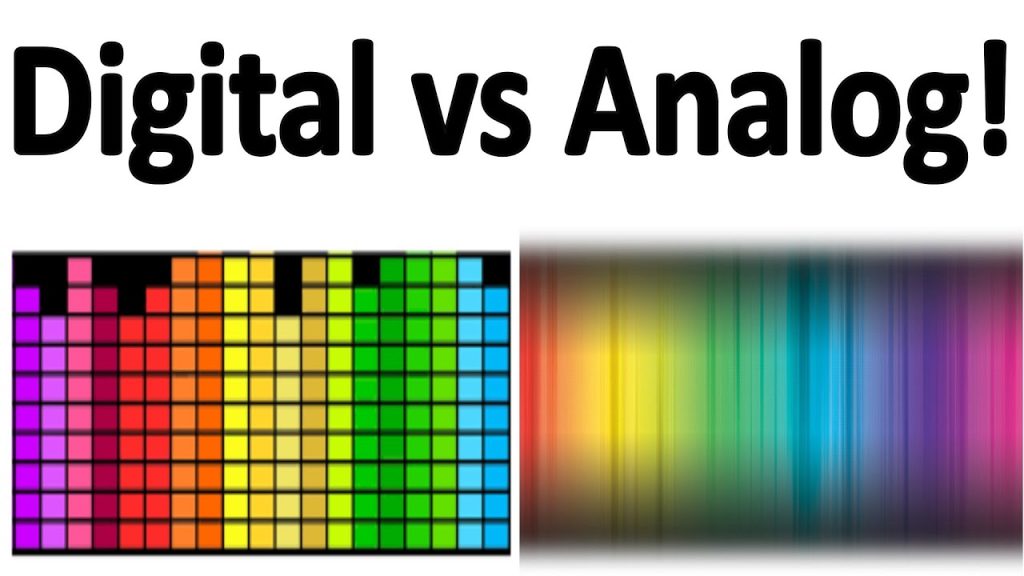
Digital representations are almost never as good as the original analog objects because some detail will always be lost when converting something to digital.
Here’s why!
Loss of Details: Analog, like real sound or film photos, captures continuous, infinite detail. Digital, on the other hand, breaks everything into small pieces (pixels or samples), so some of that richness gets lost.
- Example: Vinyl records have a fuller, warmer sound compared to CDs or MP3s because digital formats can miss subtle details in music.
Compression: Digital files are often compressed to save space, which can further reduce quality.
- Example: JPEGs compress images but can cause pixelation, making them look less sharp compared to the original photo.
Now, let’s look at the tradeoffs!
Efficiency vs. Quality: Digital is easier to store, share, and edit, but analog offers more detail.
- Example: An oil painting’s texture is visible in person, but a digital photo of it loses that depth.
Accessibility vs. Richness: Digital makes things accessible to everyone, but the experience isn’t always the same.
- Example: Viewing the Mona Lisa online is convenient, but seeing it in person offers a much richer experience.
So, what makes it worth it? Well, the answer is how we can percieve the digital conversion.
The goal with digital is usually to make it good enough that we can’t tell the difference. If the quality is better than what we can perceive, the tradeoff is worth it.
Example: HD or 4K videos look amazing, and most people can’t notice any loss of detail.